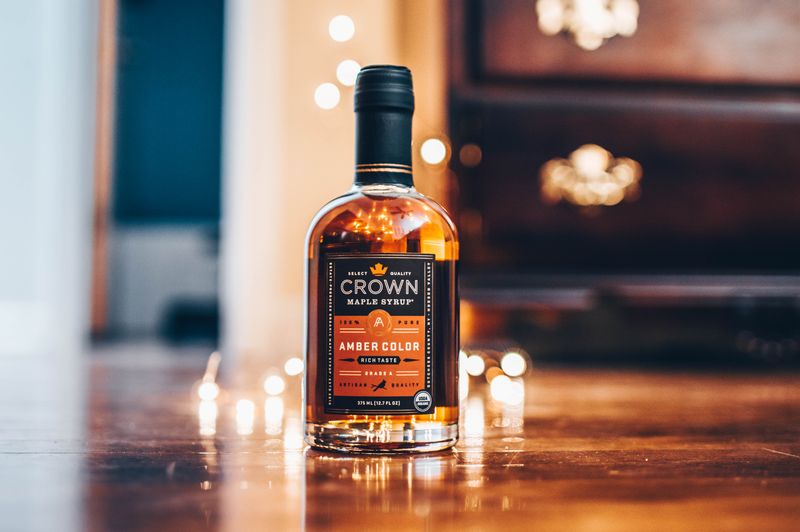
Maple syrup grading used to be a genuinely confusing mess of names — "Fancy," "Grade A," "Grade B" meant different things depending on which US state or Canadian province produced the syrup. In 2015, the United States and Canada moved toward a shared grading system based on color and flavor intensity rather than old quality-tier language, and most producers have since adopted it. Understanding what the grade labels actually describe — not quality, but color and strength of flavor — helps you buy the right syrup for what you're making instead of defaulting to whatever's cheapest on the shelf.
Why Grading Exists at All
Maple syrup color and flavor shift over the course of a single sugaring season. Sap collected early, when it's cold and the sugar content is fresh, produces a lighter, more delicate syrup. As the season progresses and temperatures warm, the sap's chemistry changes and the resulting syrup darkens and develops a stronger, more robust maple flavor. Grading exists to describe that natural progression in a standard way, so a buyer can choose based on how they plan to use the syrup rather than guessing from the bottle's color alone.
The Four Modern Grades
The current unified grading system groups all syrup under "Grade A," then separates it into four color-based classes: Golden (Delicate Taste), Amber (Rich Taste), Dark (Robust Taste), and Very Dark (Strong Taste). Each class has an official light-transmittance range measured with a device called a spectrophotometer, which is how producers verify grade rather than relying on eyeballing the color. Syrup that falls outside even the darkest official range, usually from very late in the season, is sometimes labeled "Processing Grade" and tends to go into commercial baking and flavoring rather than being bottled for table use.
Golden and Amber: The Lighter End
Golden syrup, the lightest and most delicate, comes from early-season sap and carries a mild maple flavor that doesn't dominate whatever it's poured over. Amber, one step darker, has a fuller, more rounded maple taste while still being approachable enough for everyday pancakes and waffles. These two grades are what most people picture when they imagine classic breakfast syrup, and they're the ones most commonly sold in grocery stores labeled simply "maple syrup."
Dark and Very Dark: The Robust End
Dark syrup carries a noticeably stronger maple flavor, often described as caramelized or toffee-like, and holds up well against rich foods like oatmeal or roasted squash. Very Dark, the strongest and least delicate grade, is prized by bakers and cooks who want maple flavor to actually come through in a finished dish rather than get lost — glazes, barbecue sauces, and baked goods that need a bold maple note usually call for this grade specifically.
Matching Grade to Use
For pouring straight over pancakes or waffles, Golden or Amber lets the syrup's own character come through without overwhelming the plate. For baking, cooking into glazes, or anywhere the syrup has to compete with other strong flavors, Dark or Very Dark earns its place because a milder syrup would simply disappear. A useful rule of thumb: the more other ingredients a maple flavor has to compete with, the darker the grade should be.
Reading a Maple Syrup Label
Under the unified system, a legitimate bottle should state "Grade A" along with one of the four color/taste names. Older bottles or syrup from producers who haven't updated labeling may still use legacy terms like "Fancy" or "Grade B," which roughly correspond to the lighter and darker ends of the current scale, respectively, but aren't a precise match. Checking for the color class name, not just the word "Grade A," is the only reliable way to know what you're actually buying.
| Grade | Color/Taste | Flavor Intensity | Typical Use |
|---|---|---|---|
| Golden | Delicate Taste | Mild | Pancakes, waffles, light drizzling |
| Amber | Rich Taste | Medium | Everyday table syrup, oatmeal |
| Dark | Robust Taste | Strong | Baking, roasted vegetables |
| Very Dark | Strong Taste | Very strong | Glazes, sauces, bold baked goods |
Common mistakes
- Assuming a darker grade means lower quality, when darkness only reflects when in the season the sap was collected, not a flaw.
- Using a delicate Golden syrup in a recipe that needs a strong maple flavor to come through, and ending up with a dish that barely tastes like maple at all.
- Confusing old "Grade B" labeling with a defective or inferior product, rather than recognizing it as a darker, more robust style under the old naming system.
- Buying "maple-flavored" syrup thinking it's real maple syrup; flavored pancake syrups are usually corn syrup with added maple flavoring and behave nothing like real maple syrup in cooking.
Frequently asked questions
- Is Dark maple syrup less healthy than Golden?
- No. The nutritional profile across grades is essentially the same; the differences are in color and flavor intensity, not sugar content or nutrients.
- What happened to "Grade B" maple syrup?
- It was folded into the unified system and now corresponds roughly to Dark or Very Dark, since the old B/A split was really describing the same color progression the new system names directly.
- Does grade affect how maple syrup should be stored?
- No, storage recommendations are the same across grades: refrigerate after opening and watch for mold, since grade reflects flavor and color, not preservative content.
- Can I substitute one grade for another in a recipe?
- Yes, with a flavor trade-off: substituting a lighter grade where a dark one is called for will produce a milder result, and vice versa a stronger one.
Sources: official grading standards and guidance published by maple syrup producer associations and agricultural extension offices in the United States and Canada; general food labeling references on maple syrup classification.