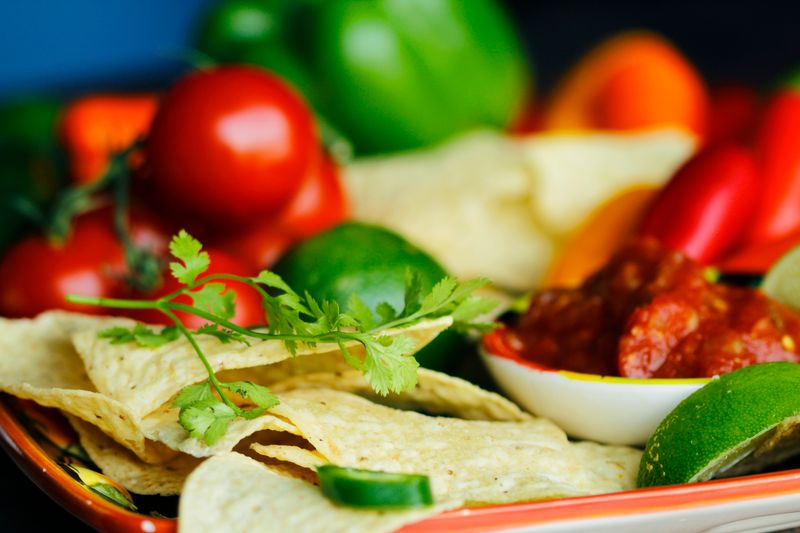
Mexican cooking distinguishes between two broad salsa families: salsa cruda, made from raw ingredients, and salsa cocida, made from ingredients that are cooked before or after blending. Both are central to everyday Mexican cuisine and to the many regional and household variations within it, and the choice between them is not about one being more "authentic" than the other — both are long-standing, equally legitimate techniques suited to different situations. This guide explains how each is built, why they taste so different, and which dishes tend to call for one over the other.
Two salsa families: cruda and cocida
Salsa cruda, often called pico de gallo in its chunkier form, is made by chopping raw tomatoes, onion, chiles, and herbs together, with lime juice and salt for seasoning. Salsa cocida involves roasting, boiling, or charring some or all of the ingredients — tomatoes, tomatillos, chiles, onion, garlic — before blending them into a sauce. The underlying ingredients can overlap heavily between the two; what changes is whether heat is applied before the ingredients are combined, and that single difference drives nearly everything else about how each salsa behaves and tastes.
How fresh salsa is built
A good salsa cruda depends on the quality of its raw ingredients, since there is no cooking step to concentrate flavor or soften harshness. Ripe tomatoes, a sharp but not overpowering onion, fresh chiles, cilantro, and lime juice are chopped — traditionally by hand, to control the texture — and seasoned with salt just before serving. Because the ingredients stay raw, the balance of acid, salt, and heat has to be right immediately; there is no later simmer to fix an overly sharp onion or underseasoned tomato. Resting the mixture briefly before serving allows the salt to draw out some tomato liquid and soften the onion's bite slightly, which is why many cooks make it a short while ahead rather than serving it the instant it's chopped.
How cooked salsa is built
Salsa cocida starts by roasting, boiling, or charring the core vegetables — commonly tomatoes or tomatillos, along with chiles, onion, and garlic — either on a dry comal, under a broiler, or in boiling water, before blending them, usually in a molcajete or blender, into a smoother sauce. Charring in particular adds a smoky note that raw ingredients cannot replicate, and cooking softens the onion and garlic's sharpness considerably compared to their raw state. Depending on the recipe, the blended salsa may also be simmered briefly afterward to meld the flavors further and adjust the consistency.
Flavor differences: raw brightness vs cooked depth
The core difference in flavor comes down to what heat does to the vegetables. Raw tomatoes and chiles retain a brighter, more acidic, more vegetal flavor, while roasting or charring converts some of those same sugars and acids into deeper, slightly sweeter and smokier notes through caramelization. Onion and garlic go from sharp and pungent raw to mellow and rounded once cooked. Neither direction is objectively better; a bright, raw salsa and a deep, smoky one serve genuinely different purposes on the table.
Texture and shelf life differences
Salsa cruda is typically chunkier, with distinct pieces of tomato, onion, and chile, and it has a shorter usable life — usually best within a day, since the raw vegetables continue to release liquid and soften the longer they sit. Salsa cocida tends to be smoother, since the ingredients are blended after cooking, and it generally keeps longer under refrigeration, both because cooking reduces the vegetables' water content somewhat and because any pathogens on the surface of the raw ingredients are reduced by the heat.
Matching salsa type to dish
Fresh salsa works well spooned directly onto grilled meat, tacos, or eggs, where its brightness cuts through richness and its texture adds a contrasting crunch. Cooked salsa, being smoother and deeper in flavor, works well as a base simmered into a dish — enchiladas sauce, for example, or a braise — as well as a table salsa for chips, where its rounder flavor doesn't compete as sharply with other raw toppings already on the plate.
Chopping and blending technique notes
For salsa cruda, hand-chopping gives more control over texture than a food processor, which tends to over-process the tomatoes into a watery pulp before the onion is evenly distributed. For salsa cocida, a traditional molcajete produces a coarser, more textured result than a blender, which can turn the sauce almost completely smooth; both are legitimate choices, and the decision mainly comes down to the texture wanted in the finished salsa.
| Attribute | Salsa cruda (fresh) | Salsa cocida (cooked) |
|---|---|---|
| Ingredient state | Raw | Roasted, boiled, or charred |
| Flavor character | Bright, acidic, vegetal | Deeper, often smoky |
| Typical texture | Chunky | Smoother |
| Shelf life | About a day at best quality | Several days refrigerated |
Common mistakes
- Over-processing salsa cruda in a food processor until it turns watery instead of staying chunky.
- Skipping the char or roast step in salsa cocida, which leaves out the smoky depth that step is meant to add.
- Salting fresh salsa too far ahead, which draws out excess liquid and makes it watery by serving time.
- Using underripe tomatoes in a fresh salsa, where there's no cooking step to compensate for a lack of natural sweetness.
Frequently asked questions
- Is one type of salsa more traditional than the other?
- No — both raw and cooked salsas have long, well-documented histories in Mexican cooking and serve different roles rather than one being a shortcut version of the other.
- Can I use the same chiles for both types?
- Yes, though their flavor changes significantly with cooking; a chile that's sharp and grassy raw often becomes smokier and milder once roasted.
- Why does my cooked salsa taste bitter?
- This is usually from charring chiles or garlic too long, which pushes past caramelization into scorching.
- Which salsa is better for canning or long storage?
- Cooked salsa is generally more suitable, since the cooking process and resulting lower water content make it more stable than a raw salsa intended for same-day use.
Sources: documented culinary history sources on Mexican salsa traditions; published culinary technique references on raw and cooked sauce preparation.