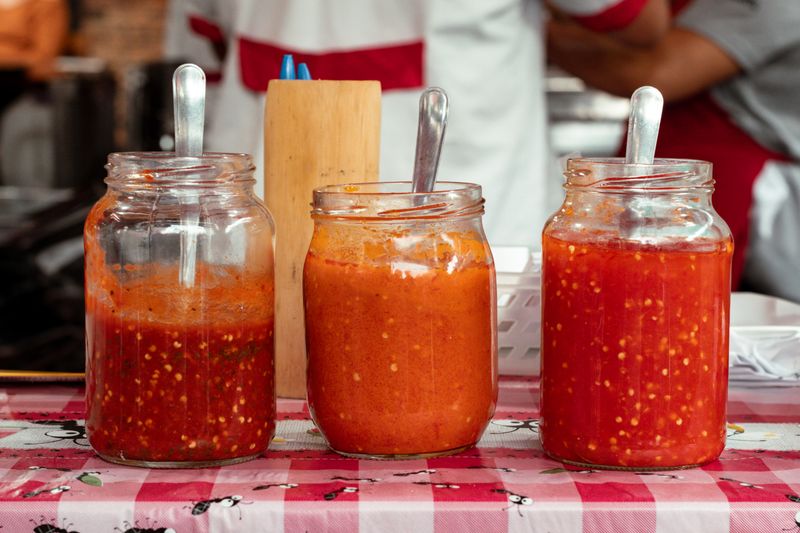
A jar of leftover sauce sitting in the back of the fridge raises the same question every time: is this still good, or has it quietly crossed the line into risky territory? Unlike store-bought condiments, which are formulated with preservatives, controlled acidity, and sterile packaging specifically to survive weeks or months on a shelf, homemade sauces are made in a home kitchen with no stabilizers and no guarantee of an even internal temperature. That means the honest answer to "how long will this last" is always a range, not a single number, and the range depends heavily on what the sauce is made of. This guide walks through the main categories of homemade sauce, explains why some last barely a few days while others hold up for weeks, and gives you a practical way to judge freshness beyond just counting days on a calendar.
Why Homemade Sauces Spoil Faster Than Store-Bought Ones
Commercial sauces are designed around shelf stability. Manufacturers measure and adjust pH, add approved preservatives, and often hot-fill or pressure-process the product into sterilized containers. A home cook rarely does any of that. A pot of gravy, a batch of pesto, or a jar of fresh salsa goes from stovetop or cutting board straight into a container and into the fridge, carrying whatever bacteria were present on the ingredients, the utensils, and the air in your kitchen. None of this makes homemade sauce unsafe to eat — people have been making and storing sauces at home for centuries — but it does mean the clock starts ticking the moment cooking stops, and it ticks faster for some sauces than others.
The Three Factors That Actually Determine Shelf Life
Instead of memorizing a list of specific sauces, it helps to understand the three variables that drive how long any sauce will keep. The first is acidity: bacteria struggle to multiply in a strongly acidic environment, which is why vinegar-heavy and citrus-heavy sauces tend to outlast mild, neutral ones. The second is moisture and protein content: dairy, eggs, and meat stock are rich growth mediums for bacteria, so sauces built on cream, butter, or egg yolks need more caution than ones built on oil and herbs. The third is how the sauce was handled before it ever reached the fridge — how quickly it was cooled, how clean the utensils and containers were, and how consistently the fridge itself holds a safe temperature, generally at or below 40°F (4°C). A sauce that checks every box for "should keep well" can still spoil early if it sat out at room temperature for hours before being chilled.
Cream- and Dairy-Based Sauces
Alfredo, béchamel, mushroom cream sauce, and similar dairy-rich sauces are among the shortest-lived items in a home fridge. Cream and butter support bacterial growth readily, and once a dairy sauce starts to turn, it usually shows obvious signs: a sour smell, a grainy or separated texture, or a slightly yellowed surface. As a general estimate, most cooked cream-based sauces are best used within about three to five days of refrigeration, and that estimate assumes the sauce was cooled quickly and stored in a sealed container rather than left loosely covered on the counter first. If you are not confident the sauce was handled well along the way, lean toward the shorter end of that window rather than the longer one.
Tomato-Based Sauces
A simmered marinara or tomato ragù sits in the middle of the spectrum. Tomatoes themselves are moderately acidic, which helps, but a long-simmered sauce often includes onion, garlic, oil, and sometimes meat, which soften that acidity and add their own spoilage risk. Most homemade tomato sauces hold up reasonably well for about five to seven days refrigerated, somewhat longer than a dairy sauce but still well short of what a jarred, commercially processed tomato sauce can achieve. A sauce that is heavy on meat will trend toward the shorter end of that range, while a simple oil, garlic, and tomato sauce with no dairy or meat will often tolerate the longer end.
Vinegar- and Acid-Based Sauces
Vinaigrettes, mustard-based sauces, many barbecue sauces, and pickled-style condiments are the most forgiving category in the fridge, precisely because the acid that gives them their tang also makes life difficult for spoilage organisms. These sauces can often be kept for two to three weeks, and in some cases considerably longer, provided they contain little or no dairy, egg, or fresh produce that could introduce its own spoilage path. A vinegar-based barbecue sauce with no cream or butter mixed in, for example, will generally outlast almost every other category on this list.
Egg-Based Sauces
Hollandaise, mayonnaise-style emulsions, and custard-based sauces deserve the most caution of all. Eggs are a protein- and moisture-rich ingredient that bacteria thrive in, and when eggs have only been gently warmed rather than fully cooked through — as in a classic hollandaise — the margin for error narrows further. As a general estimate, homemade egg-based sauces are best treated like other cooked egg dishes and used within about three to four days, and many cooks prefer to use them within a day or two for the best flavor and texture, since these sauces also tend to separate or thin out well before any safety concern arises. Commercial mayonnaise lasts far longer than this only because of added acid, salt, and controlled processing that a home kitchen does not replicate.
A Quick Reference for Fridge Life
| Sauce type | General fridge estimate | What shortens it |
|---|---|---|
| Cream or dairy-based (alfredo, béchamel) | About 3–5 days | Slow cooling, loose storage, added cheese |
| Tomato-based (marinara, ragù) | About 5–7 days | Added meat, dairy, or low-acid tomatoes |
| Egg-based (hollandaise, custard) | About 3–4 days | Under-cooked egg, warm holding before chilling |
| Vinegar or acid-based (vinaigrette, mustard sauce) | About 2–3 weeks | Added dairy, fresh garlic, or fresh herbs |
| Oil and herb-based (pesto, chimichurri) | About 5–7 days | Fresh garlic, exposure to air causing oxidation |
These numbers are general estimates meant as a starting point, not a guarantee. Actual shelf life depends on your ingredients, how the sauce was cooked and cooled, how clean your containers and utensils are, and how reliably your refrigerator holds a safe temperature. If you are ever unsure about a specific sauce, it is worth checking current official food-safety guidance rather than relying on memory or a rule of thumb.
Common mistakes
- Leaving a hot pot of sauce on the counter to "cool down a bit" before refrigerating, which can add hours of time in a temperature range where bacteria multiply fastest.
- Storing sauce in a wide, shallow pot covered with foil instead of transferring it to a smaller, sealed container, which slows cooling and invites contamination.
- Judging freshness by smell alone, when some spoilage organisms don't produce an obvious odor until the sauce is well past its safe window.
- Treating every sauce the same way, when a vinegar-based sauce and a cream-based sauce can have very different realistic timelines.
- Repeatedly dipping a used spoon or finger into a shared container of sauce, which introduces new bacteria every time.
- Assuming a sauce is fine because it was only in the fridge a short time, while ignoring that it sat at room temperature for several hours beforehand.
Frequently asked questions
- Can I just smell a sauce to know if it's gone bad?
- Smell is a useful first check, but it isn't reliable on its own. Some spoilage shows up as off smells, sliminess, or mold, but other times a sauce can harbor bacteria without any obvious sensory warning, especially early in the spoilage process. Treat general time estimates and visual or textural changes as additional checks rather than relying on smell alone.
- Does reheating a sauce extend its fridge life?
- Thoroughly reheating a sauce to a steaming hot temperature can kill many bacteria present at that moment, but it does not reset the clock on quality or fully eliminate every risk, particularly from toxins that some bacteria can produce before reheating. It's safer to think of reheating as making a sauce safer to eat right then, not as adding extra days to its storage life.
- Why do cream sauces spoil so much faster than vinegar-based ones?
- It comes down to acidity and composition. Dairy and eggs are nutrient-rich environments that support bacterial growth, while vinegar and citrus create an acidic environment that most spoilage bacteria struggle in. That's the core reason a jar of mustard can outlast a bowl of alfredo by weeks.
- Is it safe to taste a small amount of sauce to check if it's still good?
- Tasting a tiny amount is a common habit, but it isn't a reliable safety test, since many sauces that have started to spoil don't taste noticeably different until spoilage is advanced. If a sauce is near or past its general estimated window, it's better to rely on sight, smell, and texture together, or simply discard it.
- Where can I find more precise guidance for a specific sauce?
- Because exact numbers vary by recipe, ingredients, and storage conditions, it's worth checking current official food-safety guidance for the specific category your sauce falls into, especially if it contains meat, dairy, or egg, rather than relying on a single general estimate for every situation.
Sources: official food-safety guidance on refrigerated storage of cooked foods, published culinary technique references on sauce composition and acidity.