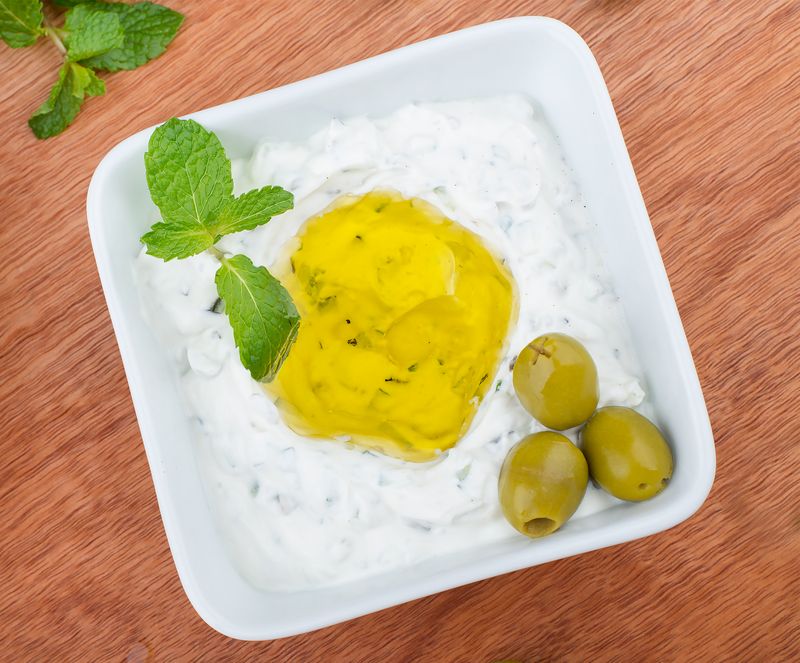
Yogurt-based sauces show up across a wide stretch of cuisines connected by trade, migration, and shared dairy traditions — tzatziki in Greek cooking, raita in South Asian cooking, cacık in Turkish cooking, and related sauces in Levantine and Caucasian kitchens. They share a core idea: yogurt's tang and body stand in for the oil-and-egg emulsions used elsewhere, cut with water from vegetables and brightened with herbs, garlic, or spice. The technique that makes or breaks all of them is the same — managing the water content of both the yogurt and whatever vegetable goes into it.
What tzatziki is and where it comes from
Tzatziki is a Greek sauce and dip made from strained yogurt, grated cucumber, garlic, olive oil, and usually dill or mint, with lemon juice or vinegar for extra acidity. It's served as a meze, a side for grilled meat, and a cooling counterpart to dishes built on strong spice or char. The sauce sits within a broader family of cold, yogurt-and-cucumber preparations found across the Eastern Mediterranean and parts of the Middle East, each shaped by local herb choices and the specific yogurt available regionally.
The draining technique that defines the texture
The single most important step in tzatziki, and in most yogurt sauces, is removing excess water before the sauce is assembled. Plain yogurt — especially lower-fat varieties — holds a surprising amount of whey, and if that whey isn't removed, the finished sauce turns watery and separates on the plate. Straining yogurt through a cheesecloth-lined sieve or a coffee filter for at least thirty minutes, and longer for a thicker result, pulls out that whey and concentrates the yogurt into something closer to a soft cheese. Greek yogurt sold pre-strained shortcuts this step, but even then, grated cucumber needs its own separate draining, since it releases significant liquid once salted.
Preparing the cucumber correctly
Grated or finely diced cucumber is salted and left to sit for ten to fifteen minutes, then squeezed firmly in a clean towel or cheesecloth to remove the liquid the salt has drawn out. Skipping this step is the single most common reason homemade tzatziki turns runny within an hour of being made, even when the yogurt itself was properly strained. Some cooks peel and seed the cucumber first to reduce bitterness and water content further; others leave the peel on for color and a firmer bite. Either approach works as long as the draining step happens.
How tzatziki compares to raita
Raita, from South Asian cooking, shares tzatziki's yogurt-and-vegetable structure but is seasoned in an entirely different direction — toasted cumin, mustard seed, chaat masala, fresh coriander, and sometimes green chile, rather than olive oil, dill, and garlic. Raita also varies more by region and by the dish it accompanies: cucumber raita is common, but so are versions built with boondi (fried chickpea flour droplets), pomegranate, or mint. Both sauces exist to cool and balance spiced or grilled food, but they're independent culinary traditions that developed their seasoning from entirely different spice pantries, not variations of one another.
Other cousins in the same family
Cacık, the Turkish counterpart, is close to tzatziki in composition but is often served thinner, sometimes diluted enough to sip as a cold soup, and may include dried mint instead of fresh dill. In the Levant and parts of the Caucasus, similar yogurt-and-herb or yogurt-and-garlic sauces appear under different names and with local variations in thickness and seasoning. The shared thread across all of them is draining technique, not a single shared recipe, which is why comparing them by process rather than by ingredient list is the more accurate way to understand the family.
Keeping a yogurt sauce stable once it's made
Even well-drained yogurt sauces separate somewhat as they sit, since salt continues pulling moisture from any remaining vegetable solids. Stirring the sauce gently before serving restores it, and making it a few hours ahead — rather than minutes before serving — actually helps the flavors settle, as long as it's kept cold. Adding olive oil at the end rather than at the start helps it sit on top as a visual and textural finish rather than disappearing into the sauce.
Yogurt sauce draining checklist
| Step | Minimum time | Why it matters |
|---|---|---|
| Strain plain yogurt | 30 minutes | Removes whey that would otherwise thin the sauce |
| Salt grated cucumber | 10–15 minutes | Draws out water trapped in the cucumber's flesh |
| Squeeze cucumber dry | Until liquid stops releasing | Removes the water the salting step pulled out |
| Rest finished sauce, chilled | At least 1 hour | Lets garlic and herbs mellow and distribute evenly |
Common mistakes
- Skipping the yogurt-straining step, especially with lower-fat or non-Greek yogurt, which leaves the sauce thin.
- Grating cucumber straight into the sauce without salting and squeezing it first.
- Using raw, uncrushed garlic in large amounts, which can overpower the sauce within a few hours as it continues to release flavor.
- Treating raita and tzatziki as the same sauce with different names, rather than separate traditions with their own seasoning logic.
- Adding olive oil too early and overmixing, which can make the sauce look greasy instead of finished.
Frequently asked questions
- Can I make tzatziki with regular yogurt instead of Greek yogurt?
- Yes, as long as it's strained first. Regular plain yogurt has more water content, so it needs a longer draining time than pre-strained Greek yogurt.
- Why does my tzatziki turn watery after a day in the fridge?
- This usually means the cucumber wasn't drained thoroughly enough before it was mixed in, or the yogurt wasn't strained long enough to begin with.
- Is tzatziki the same thing as raita?
- No. Both are yogurt-and-vegetable sauces, but they come from different culinary traditions with different seasoning — olive oil, dill, and garlic in tzatziki versus toasted spices and coriander in raita.
- Can I freeze yogurt-based sauces?
- Freezing is not recommended. Dairy-based sauces like these tend to separate and turn grainy once thawed, even if the flavor holds up.
Sources: documented culinary history sources on Eastern Mediterranean and South Asian yogurt sauce traditions; general food science references on dairy straining and water content in vegetable-based sauces.