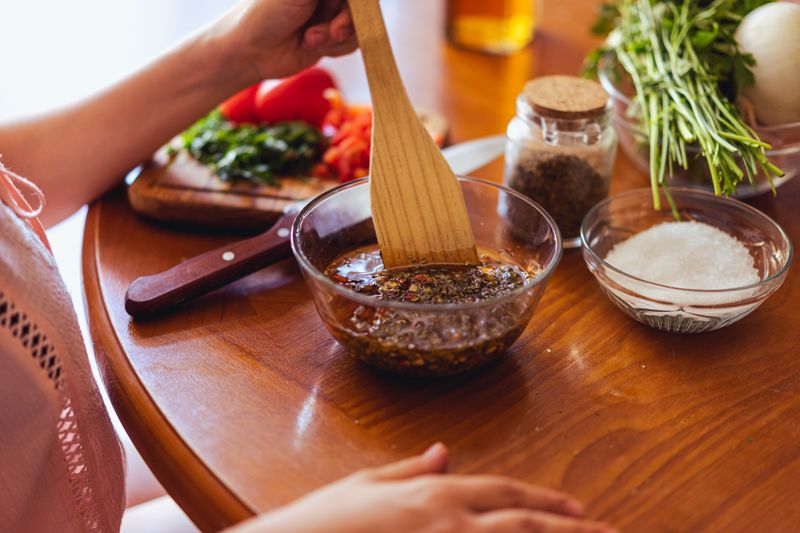
Chimichurri is an uncooked herb sauce most closely associated with Argentina and Uruguay, where it developed alongside the asado tradition of open-fire grilling. Its origin story is genuinely contested — several explanations for the name circulate, none definitively confirmed — but its role at the table is not: chimichurri exists to cut through the richness of grilled meat with acid, garlic, and fresh herb flavor, not to coat or disguise it. This guide covers the base ingredients that define chimichurri, how green and red versions differ, the texture a well-made batch should have, and the regional variation that makes "chimichurri" more of a family of sauces than a single fixed recipe.
What chimichurri is and where it comes from
At its simplest, chimichurri is finely chopped parsley and garlic suspended in oil and vinegar, seasoned with salt, pepper, and usually oregano or chili flakes. It emerged as a table sauce for grilled beef in the pampas region spanning Argentina and Uruguay, where cattle ranching and wood-fired grilling shaped much of the regional diet. Unlike many sauces built around long cooking, chimichurri is deliberately raw — a contrast of bright, sharp flavor set against meat that has spent hours over coals. Its exact origin is debated among food historians, with competing theories about the name's etymology, but its culinary function as an acidic counterpoint to grilled meat is well documented and consistent across households.
The core base: parsley, garlic, vinegar, and oil
Parsley provides the bulk and the fresh, slightly peppery backbone of the sauce; flat-leaf parsley is used far more often than the curlier variety because it has a cleaner, less bitter flavor when chopped fine. Garlic is used generously, typically minced rather than pureed, so small distinct pieces remain visible throughout the sauce. Red wine vinegar supplies the acidity that defines chimichurri's character, and a neutral or mild olive oil carries everything else and softens the vinegar's sharpness slightly. The ratio between these four ingredients varies by household, but vinegar and oil are usually present in close to equal volume, with parsley and garlic added until the mixture tastes assertively herbal and garlicky rather than simply oily.
Green chimichurri vs red chimichurri
Green chimichurri, the more internationally recognized version, is built from parsley, garlic, oregano, vinegar, and oil, sometimes with a small amount of chili flakes for heat. Red chimichurri, known in some regions as chimichurri rojo, adds paprika and often a bit of tomato paste or dried chili, giving it a deeper color and a rounder, slightly smokier flavor. Red chimichurri tends to be used on grilled meats in some of the same households that also keep a green version on hand, chosen based on the dish or simply on preference, rather than one version replacing the other.
How the texture should turn out
Chimichurri is meant to be chopped, not blended into a smooth puree. A food processor can be used for speed, but pulsed briefly and stopped before the herbs break down into a paste; the goal is small, distinct flecks of parsley and garlic suspended in the oil and vinegar, not a uniform green liquid. Letting the sauce rest for twenty minutes to an hour before serving allows the garlic and oregano to soften into the oil and vinegar, which noticeably improves the balance compared to serving it immediately after mixing.
Regional and household variation
Beyond the green-versus-red distinction, chimichurri varies meaningfully from one household or region to the next. Some cooks add a bay leaf steeped briefly in the vinegar before it's strained out; others include a small amount of finely chopped onion or a pinch of sugar to round out the acidity. The ratio of oregano to parsley also shifts regionally, with some versions leaning more heavily on dried oregano for a stronger, more savory edge. None of these variations is more correct than another — chimichurri is a sauce with a strong family resemblance across versions rather than one single fixed formula, closer in that sense to a style of cooking than to a single named recipe.
What chimichurri is traditionally served with
Chimichurri's most consistent role is as a table sauce for grilled beef, particularly the cuts typical of asado such as skirt steak and short ribs, where its acidity balances the fat rendered during grilling. It also appears alongside grilled chicken, sausage, and bread used to soak up juices at the table. Because it is not cooked into the meat, chimichurri is added at the table or brushed on just before serving, keeping its fresh, raw character intact rather than letting heat mute it.
Making a reasonable home version
A home cook without access to the specific regional ingredients used in Argentina and Uruguay can still build a version that captures the sauce's core logic: plenty of fresh parsley, a generous amount of garlic, a sharp vinegar, a mild oil, and enough rest time for the flavors to meld. This is worth treating as a home interpretation of a dish with deep regional roots, built with whatever good parsley and vinegar are available locally, rather than as a claim to have recreated a specific regional version exactly.
| Attribute | Green chimichurri | Red chimichurri |
|---|---|---|
| Main color source | Fresh parsley | Paprika, sometimes tomato paste |
| Flavor profile | Bright, herbal, sharp | Rounder, slightly smoky |
| Typical heat level | Mild, optional chili flakes | Often slightly higher |
| Common pairing | Grilled beef, chicken, bread | Grilled beef, sausage |
Common mistakes
- Blending chimichurri into a smooth puree instead of chopping it, which loses the texture the sauce is known for.
- Serving it immediately after mixing, before the garlic and oregano have had time to soften into the oil and vinegar.
- Using too little vinegar, which leaves the sauce tasting oily and flat instead of sharp.
- Substituting dried parsley for fresh, which produces a dull, muddy flavor instead of the bright, grassy note fresh parsley provides.
Frequently asked questions
- Is chimichurri a marinade or a finishing sauce?
- Traditionally it is served at the table alongside cooked meat rather than used as a marinade, though some cooks also brush a portion on near the end of grilling.
- How long does chimichurri keep?
- Refrigerated in a sealed container, it keeps well for about a week; the parsley color dulls slightly over time but the flavor remains good.
- What's the difference between chimichurri and pesto?
- Pesto typically includes cheese and nuts and is blended smooth; chimichurri has neither and is kept coarsely chopped with vinegar as its defining acid.
- Can I make chimichurri without a food processor?
- Yes — hand-chopping is the traditional method and actually makes it easier to control the texture than a processor does.
Sources: documented culinary history sources on regional South American grilling traditions; published culinary technique references on raw herb sauce preparation.