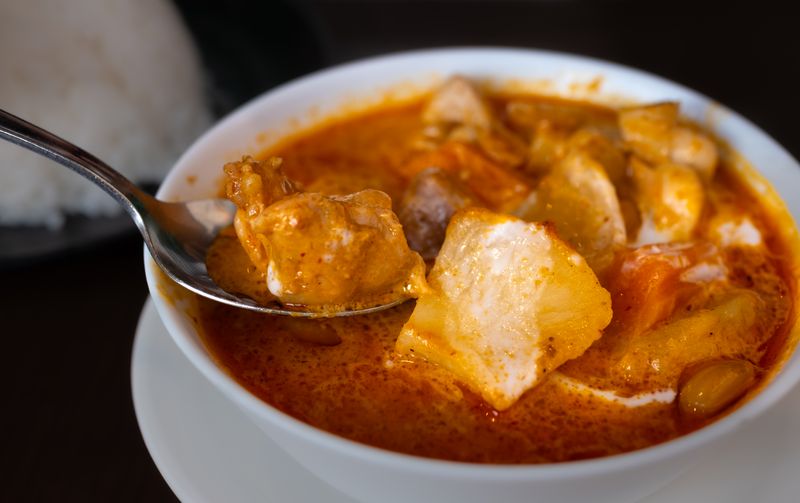
"Curry" is an umbrella term, mostly used outside South Asia, that covers an enormous range of spiced sauces with very different structures depending on the region, the dish, and the cook. Rather than one sauce, curry is better understood as several distinct bases — onion-tomato, coconut-based, and yogurt-based among the most common — each built with a different thickening and flavor logic, and each suited to different proteins, vegetables, and regional cuisines across South Asia. This guide compares those bases directly: what each one is built from, how it behaves during cooking, and how the choice of base changes the texture and flavor of the finished dish.
Why "curry" describes many different sauce bases
The word "curry" was popularized by British colonial-era usage and does not map cleanly onto any single term used across the many languages and regional cuisines of South Asia, where cooks are far more likely to refer to a dish by its specific name and base than by a general catch-all. Understanding curry as a category of techniques rather than a single sauce explains why a North Indian butter chicken, a South Indian coconut-based fish curry, and a Kashmiri yogurt-based korma can all get called "curry" in English while tasting and behaving nothing alike. Each regional tradition has developed its own base logic over a long history, shaped by local ingredients, climate, and available dairy or produce.
The onion-tomato base
Common across much of North India and parts of Pakistan, this base starts with onions cooked slowly until deeply softened and often browned, then combined with tomatoes — fresh, pureed, or sometimes a small amount of tomato paste — and simmered until the raw edge cooks off and the mixture reduces into a thick, cohesive sauce. Ginger and garlic are typically added early, and a blend of ground spices is usually added partway through cooking rather than at the very start, since whole spices and ground spices burn at different rates. This base tends to produce a sauce with a pronounced tang from the tomatoes, balanced against the sweetness of well-cooked onions, and it holds up well with both meat and vegetable dishes.
Coconut-based curry bases
In South Indian and Sri Lankan cooking, coconut — in the form of coconut milk, fresh grated coconut, or coconut paste — frequently replaces or supplements the tomato-onion base, giving the sauce a rounder, slightly sweet richness and a smoother consistency. Coconut-based curries often rely more heavily on curry leaves, mustard seeds, and tempered spices for aromatic complexity, since the coconut itself contributes relatively little assertive flavor beyond its fat and mild sweetness. This base tends to suit fish and seafood particularly well, both because coastal regions where coconut is abundant also have strong seafood traditions, and because the fat in coconut milk carries delicate flavors without overwhelming them.
Yogurt-based curry bases
Yogurt-based curries, including korma-style preparations associated with Mughal-influenced cooking in North India and Pakistan, use yogurt rather than tomatoes or coconut milk as the primary liquid and thickening element, often enriched further with ground nuts such as cashews or almonds. Because yogurt can curdle or separate if added to a very hot pan too quickly, it is usually tempered first — stirred smooth and added gradually off direct high heat, or incorporated into a dish that has already cooled slightly before returning it to a gentler simmer. The resulting sauce tends to be milder and creamier than tomato-based versions, with a tangy backdrop from the yogurt rather than from tomatoes.
The role of spice blends and tempering
Across all three bases, a tempering step — often called tadka or a similar term depending on the region — plays a major role in building flavor. Whole spices such as cumin seeds, mustard seeds, or dried chiles are briefly fried in hot oil or ghee until they release their aromatic oils, then either stirred directly into the base or used to finish the dish at the end. This step is largely independent of which base is used; it layers a different kind of flavor on top of the onion-tomato, coconut, or yogurt foundation, which is part of why two curries built on the same base can still taste quite different depending on which spices are tempered and when.
How the base changes the finished dish
The base chosen affects far more than flavor. Onion-tomato bases produce a thicker, more clingy sauce well suited to being scooped up with bread. Coconut bases are generally thinner and pour more easily, often ladled generously over rice. Yogurt-based sauces sit in between, usually thick but notably smoother and less acidic on the palate than a tomato-forward sauce. None of these textures is better than another; they are suited to different dishes, different regional breads and rice preparations, and different proteins.
Choosing a base for a given dish
A home cook deciding which base to use can reason from the protein and desired richness: a tomato-onion base suits heartier meat dishes that benefit from acidity cutting through fat; a coconut base suits fish, shellfish, and vegetable dishes where a gentler, rounder sauce is wanted; a yogurt base suits dishes meant to taste rich and mild rather than sharp or tangy. These are reasonable starting guidelines rather than fixed rules, since many regional dishes combine elements of more than one base.
| Base | Primary liquid | Typical texture | Common pairing |
|---|---|---|---|
| Onion-tomato | Tomatoes, cooked onion | Thick, clingy | Meat, bread-based meals |
| Coconut-based | Coconut milk or paste | Thinner, pourable | Fish, seafood, rice |
| Yogurt-based | Yogurt, often with ground nuts | Smooth, creamy | Milder meat and vegetable dishes |
Common mistakes
- Adding yogurt straight into a very hot pan, which causes it to curdle instead of blending smoothly into the sauce.
- Rushing the onion-cooking step in a tomato-onion base, which leaves the finished sauce tasting raw and sharp instead of rounded.
- Treating all curry pastes or powders as interchangeable, when they are formulated for different bases and spice balances.
- Skipping the tempering step entirely and relying only on ground spice powder, which produces a flatter, less layered aroma.
Frequently asked questions
- Is "curry powder" used in most South Asian cooking?
- Not typically in the form sold in Western supermarkets. Most regional cooking relies on individual whole and ground spices combined to order, or on more specific regional spice blends.
- Can I combine a coconut base with a tomato base?
- Yes — many regional dishes do exactly this, using tomato for acidity and coconut milk for richness in the same sauce.
- Why does my yogurt-based sauce keep splitting?
- It's usually added too quickly to liquid that's too hot. Stirring the yogurt smooth first and adding it gradually off high heat prevents this.
- Which base is easiest for a first attempt at home?
- An onion-tomato base is generally the most forgiving, since it relies on straightforward reduction rather than the more delicate temperature control yogurt requires.
Sources: documented culinary history sources on regional South Asian cooking traditions; published culinary technique references on sauce base preparation and spice tempering methods.