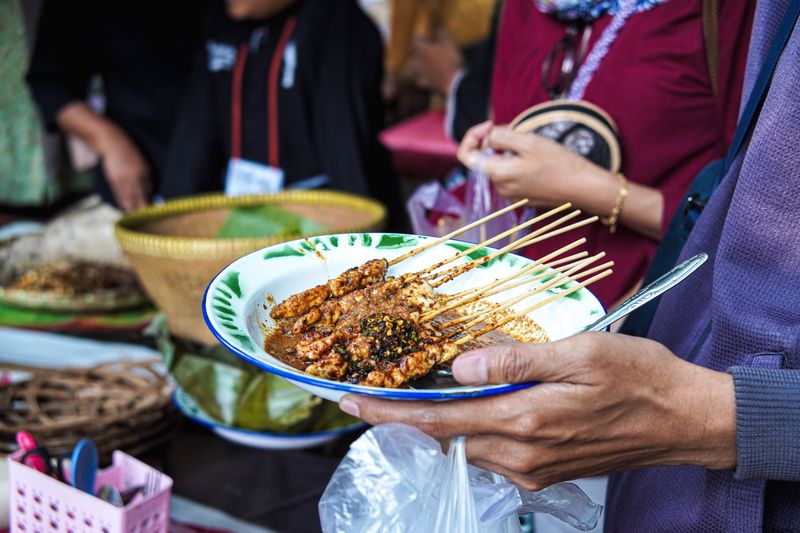
Peanut sauce covers a wide range of preparations, from the thick, grilled-meat accompaniment served with satay across Indonesia and Malaysia to the thinner, often sweeter dressing used for cold noodle dishes in Chinese-American and other adapted cuisines. These two uses share a base of ground peanuts or peanut butter loosened with liquid, but they diverge sharply in thickness, seasoning, and how they're meant to be eaten. Understanding that divergence is the difference between a sauce that clings properly to a skewer and one that coats noodles without turning gluey.
Where peanut sauce comes from
Peanuts are not native to Southeast Asia; they arrived from the Americas through trade routes established after European contact, and were adopted into local cooking over the following centuries. In Indonesia and Malaysia, ground peanuts became the base for satay sauce, served alongside skewered, grilled meat as part of a broader tradition of dipping sauces and sambals. The sauce itself is typically built with aromatics already common in the regional pantry — galangal, lemongrass, shallot, tamarind, palm sugar — rather than borrowed flavorings, which is why satay peanut sauce tastes distinct from other peanut-based condiments found elsewhere. Peanut sauces used on cold noodles, by contrast, often reflect later, more informal adaptations found in Chinese-American restaurant cooking and home kitchens outside Southeast Asia; they are a related but separate culinary lineage, not a regional variant of satay sauce, and treating the two as interchangeable understates how differently each one is built and served.
The base structure every peanut sauce shares
Regardless of the final use, most peanut sauces start from the same four components: a peanut base (smooth peanut butter or finely ground roasted peanuts), a liquid to loosen it (water, coconut milk, or stock), an acid (lime juice, rice vinegar, or tamarind), and a source of heat and aromatics (chile, garlic, ginger). From there, the ratio of liquid to peanut base and the choice of sweetener and seasoning determine whether the result reads as a thick dipping sauce or a pourable dressing.
Building a satay-style peanut sauce
Satay sauce is meant to sit on top of grilled meat without running off the skewer, so it stays thick — closer to a spoonable paste than a sauce you'd pour. A common approach starts by sautéing shallot, garlic, and chile in a little oil until fragrant, then stirring in ground peanuts or peanut butter along with coconut milk, added gradually so the mixture doesn't separate. Palm sugar and tamarind or lime juice balance the richness, and the sauce is simmered gently just long enough to meld the flavors, not reduce heavily. The finished sauce should hold a ridge when you drag a spoon through it.
Building a noodle-style peanut sauce
A sauce meant for tossing with noodles needs to be thin enough to coat each strand without clumping at the bottom of the bowl. This version typically skips the cooking step entirely: peanut butter, warm water or a splash of the noodle cooking water, soy sauce, rice vinegar, a little sugar, and sesame oil are whisked together until smooth, with chile oil or crushed red pepper added at the end. Because the sauce is served cold or at room temperature and isn't anchored to meat, it leans more toward a bright, sharp balance of soy, vinegar, and chile rather than the rounder, coconut-softened profile of satay sauce.
Balancing richness, sweetness, sourness, and heat
Both styles rely on the same balancing act, just with different target points. Peanut butter brings fat and a mild sweetness on its own, which means added sugar should be used sparingly and tasted as you go — it's easy to end up with a sauce that reads as dessert-adjacent rather than savory. Acid is what keeps either version from feeling heavy; without enough lime juice, vinegar, or tamarind, peanut sauce tastes flat no matter how much salt or chile you add. Build the sauce in small adjustments: loosen with liquid, taste, add acid, taste again, then adjust salt and heat last.
Keeping the sauce smooth instead of grainy or split
Peanut sauce can fail in two different ways. It turns grainy when natural, unstabilized peanut butter is used straight from a jar where the oil has separated — stirring the jar thoroughly before measuring, or warming the peanut butter slightly, smooths this out. It can also look broken or oily when liquid is added too quickly to very cold peanut butter; adding liquid gradually and whisking (rather than dumping it all in at once) keeps the fat and water integrated. Coconut milk-based satay sauce is more prone to this than water-based noodle sauce, since coconut milk itself can separate under high heat.
Satay sauce vs noodle sauce at a glance
| Feature | Satay-style | Noodle-style |
|---|---|---|
| Thickness | Thick, spoonable | Thin, pourable |
| Primary liquid | Coconut milk | Water or broth |
| Served | Warm, over grilled meat | Room temperature or cold, tossed with noodles |
| Characteristic flavor | Rounded, coconut-softened, tamarind-tinged | Sharper, soy- and vinegar-forward |
| Typical origin context | Indonesian and Malaysian satay tradition | Later adaptation, common in Chinese-American cooking |
Common mistakes
- Using peanut butter with added sugar and oils meant for toast, which throws off the sauce's balance before any other seasoning is added.
- Skipping the acid, which leaves the sauce tasting heavy and one-note no matter how much chile or salt is added.
- Adding coconut milk too quickly over high heat in satay sauce, which can cause it to separate.
- Making noodle sauce too thick to toss evenly, so it pools at the bottom of the bowl instead of coating the noodles.
- Calling one version "the real" peanut sauce and the other a knockoff, when they are simply different culinary traditions with different goals.
Frequently asked questions
- Can I use the same peanut sauce for satay and noodles?
- You can start from one base and adjust it, but you'll usually need to thin a satay sauce with extra liquid and brighten it with more acid and soy to make it work for noodles, or thicken a noodle sauce and add coconut milk to make it work for satay.
- Does peanut sauce need coconut milk?
- Satay sauce traditionally uses coconut milk for body and a rounded flavor. Noodle-style peanut sauces usually skip it in favor of water or broth, which keeps the sauce lighter and easier to toss.
- Why does my peanut sauce taste flat?
- Most flat-tasting peanut sauce is missing acid. Add lime juice, rice vinegar, or tamarind in small increments and taste between additions.
- Can other nut or seed butters replace peanuts?
- Almond butter, cashew butter, or sunflower seed butter can substitute in a pinch, but each has a different fat content and sweetness, so the sauce will need re-balancing rather than a straight swap.
Sources: documented culinary history sources on the introduction of peanuts to Southeast Asia and the development of satay traditions; general culinary reference materials on peanut-based sauce composition and emulsification behavior.