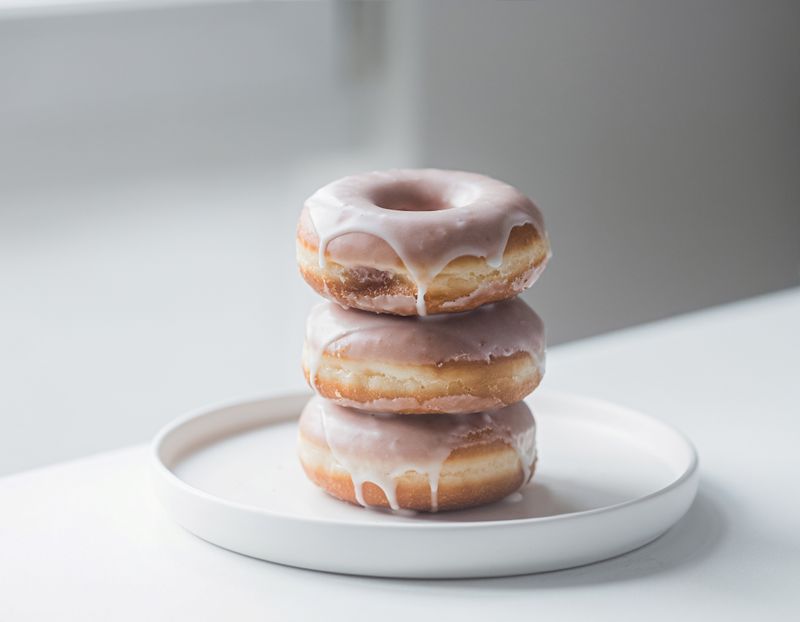
The difference between a glaze that looks professionally shiny and one that dries dull and cracked usually comes down to two things most recipes gloss over: the exact ratio of sugar to liquid, and how long the glaze is allowed to rest before it's considered finished. A glossy glaze isn't complicated chemistry, but it is sensitive to small changes in consistency, temperature, and resting time in a way that makes "just mix powdered sugar and milk" advice unreliable if you want a shiny, crack-free finish.
What Actually Creates the Shine
Gloss in a simple glaze comes from a smooth, even sugar structure on the surface as it sets, rather than from any special ingredient. Powdered sugar dissolved fully into a liquid, with no undissolved grains left behind, sets into a glassy-looking surface because light reflects evenly off it. Any undissolved sugar, or a glaze applied too thick, breaks up that even surface and leaves it looking matte or grainy instead of glossy.
The Sugar-to-Liquid Ratio That Works
A basic glossy glaze is built from powdered sugar and a liquid — milk, water, or juice — in a ratio thick enough to coat a donut or cake without running straight off, but thin enough to still spread into a smooth, even layer. Too much liquid and the glaze is too thin to build any real sheen once it sets; too little and it sets thick and cracks as it dries, since a thick layer of sugar paste is more prone to splitting than a thin one as it hardens.
Corn Syrup and Other Gloss Boosters
A small amount of corn syrup or glucose syrup added to the glaze noticeably improves shine and also helps prevent the sugar from recrystallizing as it cools, which is one of the main causes of a dull or cloudy finish. The corn syrup doesn't add much sweetness at the quantities typically used; its job is almost entirely textural, keeping the glaze glossy and pliable rather than brittle.
Temperature: Why Warm Glaze Sets Differently
Glaze applied warm spreads more easily and settles into a thinner, more even layer than glaze applied cold, which tends to sit thicker and set with visible brush or dip marks. Warming the glaze slightly, just enough to loosen it without thinning it with extra liquid, is a common trick for getting an even dip on donuts. Applying a warm glaze to a cake or donut that's still warm itself, though, can cause the glaze to run too much, so the base should be cool while the glaze is gently warmed.
Resting Time: The Step Most Recipes Skip
A freshly applied glaze needs to sit undisturbed for a stretch of time, often 20 minutes to an hour depending on thickness, before it fully sets into a stable, glossy shell. Moving, stacking, or touching donuts and cakes before the glaze has set disturbs the surface and leaves it looking dull or fingerprinted instead of smooth. Patience during this resting window matters as much as the ratio itself for getting a clean, glossy finish.
Why Glazes Crack
Cracking happens when the glaze dries faster on the outside than it can flex on the inside, which is more likely with a glaze that's too thick, too sugar-heavy, or set in a very dry, low-humidity environment. Adding a touch more liquid or a small amount of corn syrup gives the glaze more flexibility as it dries, reducing the stress that causes visible surface cracks.
| Problem | Likely cause | Fix |
|---|---|---|
| Dull, matte finish | Undissolved sugar or glaze too thick | Strain glaze, thin slightly, apply in a thinner layer |
| Glaze runs off completely | Too much liquid, or donut/cake too warm | Thicken glaze, let base cool before dipping |
| Cracked surface once dry | Glaze too thick or too sugar-heavy | Add a touch more liquid or a little corn syrup |
| Cloudy instead of glassy | Sugar recrystallizing as it cools | Add corn syrup or glucose syrup to the mix |
Common mistakes
- Dipping or glazing a cake or donut while it's still warm, causing the glaze to run off almost entirely.
- Skipping a quick strain of the glaze, leaving undissolved sugar lumps that break up the smooth, glossy surface.
- Moving or stacking glazed items before the glaze has fully set, leaving dull spots or fingerprints.
- Making the glaze too thick to fix a too-thin batch, which leads to cracking instead of a smooth finish.
- Storing glazed items in a humid, covered container before the glaze has set, which keeps the surface tacky instead of letting it firm up.
Frequently asked questions
- Do I need corn syrup to get a glossy glaze?
- No, a basic sugar-and-liquid glaze can still look glossy if it's smooth and applied thin, but corn syrup makes the shine more reliable and helps prevent cracking.
- How long should a glaze rest before serving?
- Most thin glazes set enough to handle gently within 20 to 30 minutes; thicker glazes may need closer to an hour to fully firm up.
- Can I color a glossy glaze without ruining the shine?
- Yes, gel food coloring works well since it adds minimal extra liquid; liquid food coloring in large amounts can thin the glaze enough to affect both shine and set time.
- Why does my glaze look fine warm but dull once it cools?
- That's usually sugar recrystallizing as the glaze cools, which a small amount of corn syrup or glucose syrup helps prevent.
Sources: published baking and pastry technique references on glaze and icing consistency; general food science references on sugar crystallization behavior.