Walk into most kitchens and you will find a bottle labeled "chocolate syrup" next to a jar or saucepan of something that gets called "chocolate sauce," and the two names often get used as if they mean the same thing. They don't. A syrup and a sauce start from different ingredient lists, behave differently when they hit a cold surface, and were designed to solve different problems. Knowing the difference matters the moment you're standing at the stove trying to decide whether to stir cocoa and sugar into water or melt chopped chocolate into cream. Pick the wrong one and a sundae ends up swimming in a thin puddle, or a glass of chocolate milk turns into a gritty, half-melted mess. This guide breaks down what each one is actually made of, how that changes texture and shelf life, and how to approximate one when a recipe calls for the other but your pantry only has ingredients for its cousin.
What Chocolate Syrup Is Actually Made Of
Classic chocolate syrup, the kind squeezed into milk or drizzled thin over pancakes, is built from cocoa powder, sugar, and water, simmered briefly until the sugar dissolves and the mixture thickens just enough to coat a spoon without clinging to it. A pinch of salt sharpens the flavor, and a small amount of vanilla rounds out the bitterness that unsweetened cocoa carries on its own. Some commercial versions add corn syrup for body and a touch of stability, but the defining trait is that there is no real chocolate, and therefore no cocoa butter or dairy fat, in the mix.
Because cocoa powder has already had most of its fat pressed out during processing, syrup made from it stays thin and fluid even when cold. It pours like a thick juice rather than melting like a solid. That lack of fat is also what makes the syrup shelf-stable for a long stretch compared to anything built on cream or butter.
What Chocolate Sauce Is Actually Made Of
Chocolate sauce usually starts with real chocolate, either chopped from a bar or already in disc form, melted into warm cream in something close to a loose ganache. Some versions swap in butter for part or all of the cream, and many recipes add a spoonful of corn syrup or glucose syrup to keep the sauce glossy and to stop sugar from crystallizing as it cools. The fat from both the chocolate's cocoa butter and the dairy is what gives the sauce its body.
That fat content is the whole point. It's what makes the sauce taste rounder and heavier on the tongue, and what lets it set up slightly as it cools, going from a warm, thin pour to a thicker, almost fudgy consistency at room temperature. A good chocolate sauce should feel like it has weight; that weight comes directly from the cream and chocolate solids, not from added starch or thickener.
Texture and Mouthfeel Side by Side
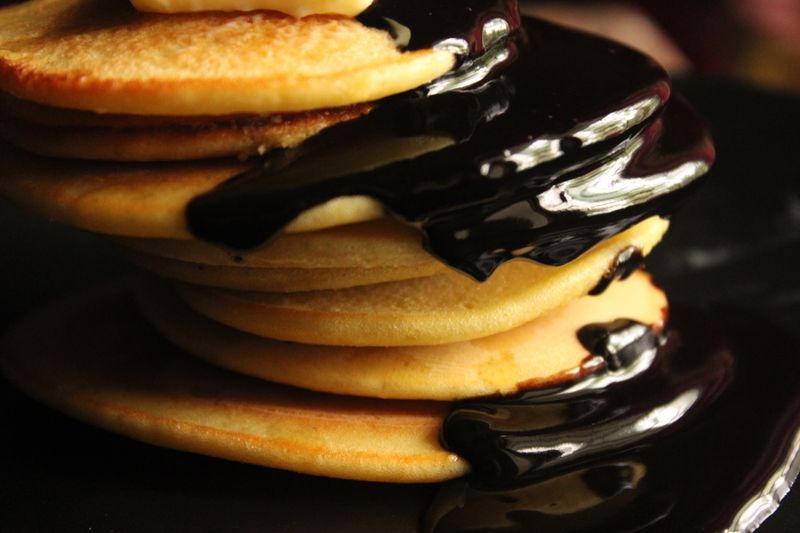
Pour both side by side and the difference is obvious within a second. Chocolate syrup runs thin, close to the consistency of heavy chocolate milk, and it disappears into whatever it touches. Stirred into cold milk, it dissolves almost completely, leaving no separate layer behind. Poured over pancakes, it spreads out in a flat sheet rather than pooling.
Chocolate sauce behaves like a true sauce. It coats a spoon and holds a visible film on the back of it, it drapes over a scoop of ice cream rather than soaking into it, and it holds its shape in rivulets instead of leveling out flat. That difference comes entirely from fat and from the slight thickening that happens as melted chocolate cools and the cocoa butter inside it begins to firm up again.
Where Each One Belongs
Syrup earns its keep in places where you want chocolate flavor without added richness getting in the way: stirred into cold or hot milk, drizzled in a thin stream over waffles, or swirled into a milkshake where its thinness actually helps it blend rather than clump. It's also the better choice for kids' snacks and lunchbox treats, since it keeps well without refrigeration for a reasonable stretch.
Sauce is for moments where richness is the goal: poured warm over ice cream so it partially sets into a soft shell, used as a dip for strawberries or churros, or drizzled decoratively across a plated dessert where its gloss and body read as more intentional than a thin syrup ever could.
Storage and Shelf Life
Cocoa-based syrup, with its low fat content and high sugar concentration, keeps well at room temperature for weeks in a sealed bottle and considerably longer in the refrigerator, similar to other sugar-heavy syrups. The sugar binds much of the available water, which makes it inhospitable to mold and bacteria.
Cream- or butter-based chocolate sauce is a different story. Because it contains dairy fat, it needs refrigeration and has a noticeably shorter window, generally measured in days to a couple of weeks rather than months. Treat any leftover sauce the way you would treat a dessert custard: refrigerate promptly, and don't leave it sitting out at room temperature for extended periods.
Converting One Into the Other
If a recipe calls for sauce but you only have syrup ingredients, warm a little heavy cream and whisk in cocoa powder and sugar off the heat; it won't have the depth of real melted chocolate, but the added fat gets you closer to a sauce-like body. Going the other direction, thinning a chocolate sauce with warm water or milk a tablespoon at a time will loosen it toward syrup consistency, though it will never be quite as shelf-stable since the dairy fat is still present.
Chocolate Syrup vs Chocolate Sauce at a Glance
| Feature | Chocolate Syrup | Chocolate Sauce |
|---|---|---|
| Base ingredients | Cocoa powder, sugar, water | Real chocolate, cream and/or butter |
| Fat content | Very low | Moderate to high |
| Texture | Thin, pourable, milk-like | Thick, glossy, coats a spoon |
| Shelf life | Weeks at room temp, longer chilled | Days to about two weeks, refrigerated |
| Best use | Milk, light drizzling, shakes | Plating, dipping, pouring over ice cream |
Common mistakes
- Cooking chocolate syrup too long on high heat, which can scorch the cocoa and turn the flavor bitter and slightly burnt instead of just rich.
- Using chocolate sauce straight from the fridge without rewarming it gently, which leaves it too stiff to pour and prone to seizing at the edges.
- Leaving cream-based chocolate sauce out on a dessert table for hours, which is unsafe given its dairy content and shortens its usable life afterward.
- Assuming any chocolate syrup can substitute one-for-one for sauce in a recipe that depends on body, like a ganache tart filling, where the lack of fat will leave the dessert runny.
- Adding cold cream directly to melted chocolate instead of warming it first, which can cause the chocolate to seize into a grainy, broken texture rather than a smooth sauce.
- Storing chocolate syrup in a container that was not fully clean, introducing moisture or crumbs that can shorten its otherwise long shelf life.
Frequently asked questions
- Is chocolate syrup just a thinner version of chocolate sauce?
- Not exactly. The thinness comes from a completely different ingredient base, cocoa powder and water rather than melted chocolate and cream, so syrup lacks the fat that gives sauce its richness, not just its thickness.
- Can I use chocolate syrup in a recipe that calls for chocolate sauce?
- For stirring into milk or a light drizzle, yes. For anything relying on body, like a layered dessert or a dip, the result will be thinner and less rich than intended.
- Why does chocolate sauce harden slightly when poured over cold ice cream?
- The cocoa butter and any added fat in the sauce firm up again as the temperature drops, which is the same mechanism behind a magic shell topping, just at a lower fat concentration.
- Does chocolate syrup need refrigeration after opening?
- Commercial syrup is often shelf-stable unopened and fine at room temperature for a good stretch after opening; homemade cocoa syrup keeps longest when refrigerated, since it has no preservatives.
- Why is my homemade chocolate sauce grainy instead of smooth?
- That usually means the chocolate seized, often from adding liquid that was too cold or too little of it, or from overheating the chocolate before the cream was incorporated.
Sources: published culinary technique references on confectionery sauces and ganache; general food science references on sugar concentration, water activity, and dairy fat stability.