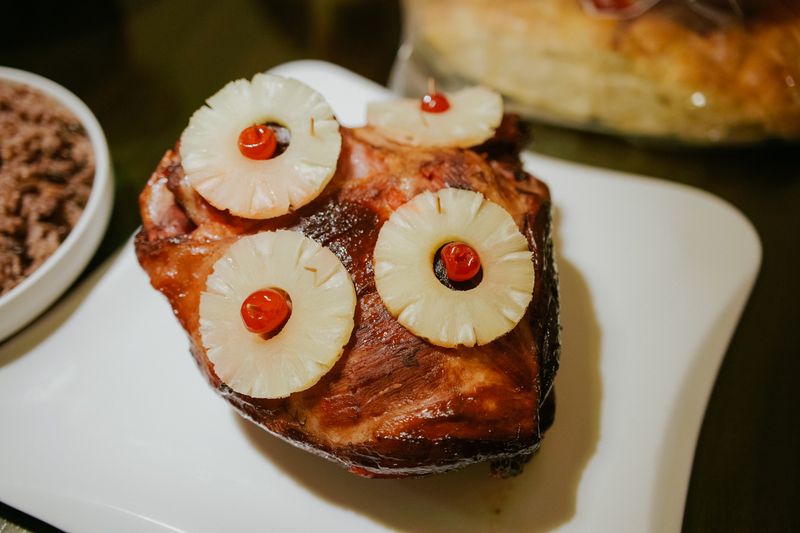
Brown sugar glaze is the classic finish on a holiday ham, and for good reason: it's cheap, forgiving, and produces a deeply caramelized, almost candy-like crust that plain white sugar can't quite match. The molasses in brown sugar is what sets it apart, adding moisture, a deeper flavor, and a slightly different caramelization behavior than refined sugar alone. Getting a glaze that actually clings to the ham or pork roast instead of pooling in the pan, though, depends on a scoring technique and a basting rhythm that most recipes mention only in passing.
Why Brown Sugar Works So Well for Glazing
Brown sugar is white sugar with molasses either left in or added back, and that molasses content changes how the sugar behaves under heat. It holds a bit more moisture than plain sugar, which helps it melt into a glaze more readily, and it caramelizes into a darker, richer color and flavor at a given temperature than white sugar would. The darker the brown sugar — light versus dark — the more pronounced that molasses flavor becomes, which is a simple way to dial the glaze's depth up or down without changing anything else in the recipe.
Why Scoring the Ham Matters
A glaze brushed onto a smooth, unscored ham surface mostly just sits on top and slides off as it melts. Scoring the surface in a shallow diamond pattern, cutting just through the fat cap without reaching the meat underneath, creates channels and edges that hold the glaze in place and give it more surface area to caramelize. It also helps rendered fat escape during cooking, which otherwise can make the glaze slide off in a greasy layer rather than setting into a crust.
Building the Glaze: The Basic Ratio
A standard brown sugar glaze is built from brown sugar, a liquid to help it dissolve and spread — often fruit juice, mustard, or a splash of vinegar — and sometimes butter for richness and a smoother melt. The liquid-to-sugar ratio determines how thick the glaze is before it goes on the ham; a thicker paste clings to a scored surface better than a thin, runny mixture that tends to run off into the pan before it has a chance to set.
Basting Technique and Timing
Because brown sugar's molasses content makes it brown fast, the glaze is almost always applied in the final portion of cooking, in multiple light coats rather than one heavy layer. Basting every 15 to 20 minutes during the last hour of a ham's roasting time lets each layer partially set before the next goes on, building up a thicker, more lacquered crust than a single application ever could. Applying the full amount of glaze at the very start of a long roast almost guarantees it burns well before the ham is finished.
Common Reasons the Glaze Slides Off
A glaze that won't stay put usually comes down to one of three causes: an unscored surface that gives the glaze nothing to grip, a glaze that's too thin and runs off before it sets, or rendered fat pooling underneath the glaze and lifting it away from the meat. Scoring addresses the first problem directly, thickening the glaze with a touch more sugar or a brief stovetop reduction addresses the second, and basting in thin, successive layers rather than one thick coat helps manage the third.
Finishing Touches and Flavor Variations
Classic additions to a brown sugar base include whole cloves pressed into the scored diamonds for a traditional look and aroma, a spoonful of mustard for sharpness against the sweetness, or pineapple juice for acidity and a fruitier top note. Whatever the additions, the brown sugar itself is still doing the structural work — providing the sugar that caramelizes into the crust — while everything else adjusts flavor around that base.
| Step | Purpose | Common error if skipped |
|---|---|---|
| Scoring the surface | Gives the glaze somewhere to grip | Glaze slides off into the pan |
| Thickening the glaze mixture | Helps it cling instead of running off | Thin, watery coating that never sets |
| Basting in stages, late in cooking | Builds a layered crust without burning | Burnt, bitter glaze from one early application |
| Letting rendered fat drain | Keeps the glaze from lifting off on a greasy layer | Glaze detaches in sheets |
Common mistakes
- Skipping the scoring step entirely, leaving the glaze with nothing to hold onto on a smooth fat cap.
- Applying all the glaze in one early coat instead of several light layers near the end of cooking.
- Using a glaze that's too thin, so it runs off into the roasting pan before it has time to caramelize.
- Roasting at too high a temperature during the glazing window, which burns the molasses sugars quickly.
- Not accounting for rendered fat pooling under the glaze, which can lift an otherwise well-set crust away from the meat.
Frequently asked questions
- Light or dark brown sugar for a ham glaze?
- Either works; dark brown sugar has more molasses and gives a deeper, more pronounced flavor, while light brown sugar gives a milder, slightly sweeter result.
- Do I need to score a pork tenderloin the same way as a ham?
- Not usually. Tenderloin has little to no fat cap to score, so the glaze is typically just brushed on directly in thin coats rather than relying on scoring to hold it.
- Can I make the glaze ahead and reheat it?
- Yes, the glaze mixture keeps well refrigerated for about a week; warm it gently before basting so it spreads easily.
- Why is my glaze grainy instead of smooth?
- That usually means the sugar didn't fully dissolve into the liquid before application; warming the mixture briefly and stirring until smooth fixes it.
Sources: published culinary technique references on ham glazing and roasting methods; general food science references on sugar caramelization and molasses composition in brown sugar.