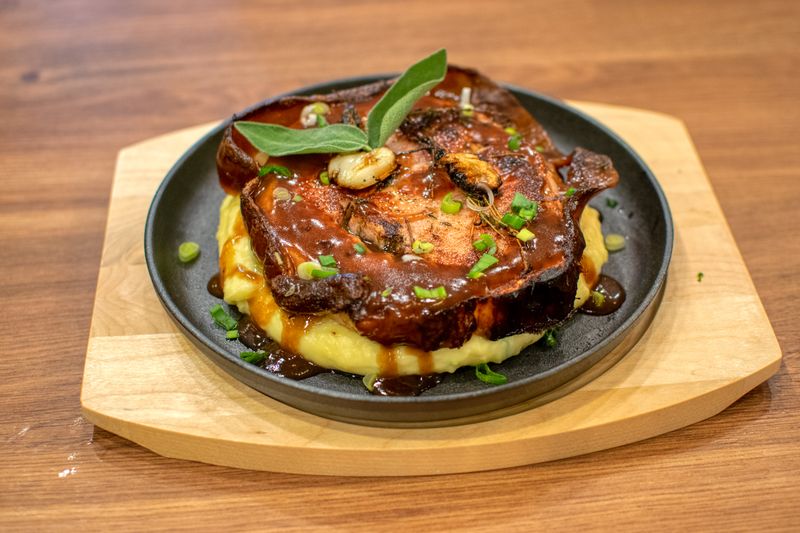
Recipes and menus throw around "brown sauce," "gravy," "jus," and "demi-glace" as if they're interchangeable, and in casual conversation they often are. But these four terms actually describe a chain of related products that differ in how they're made, how concentrated they are, and how they're meant to be used. Knowing where each one sits on that chain makes it much easier to follow a recipe correctly, substitute one for another when you're missing an ingredient, and understand why a restaurant sauce tastes nothing like the gravy from a holiday dinner even though both are, technically, brown and savory.
Why these terms get mixed up
Part of the confusion is historical. "Brown sauce" in classic French cooking refers specifically to espagnole, one of the five mother sauces, and everything else on this list is either a direct descendant of espagnole or a parallel, simpler way of achieving a similar result without the multi-day process. Outside professional kitchens, though, "brown sauce" gets used loosely to mean almost any dark, savory sauce served with meat — including bottled condiments in some English-speaking countries that have nothing to do with espagnole at all. That looseness is harmless in daily conversation, but it causes real problems when a recipe calls for "brown sauce" and you don't know whether it means a thin pan jus or a thick, glossy reduction.
Espagnole: the classical starting point
Espagnole is built from a dark roux — butter and flour cooked well past the pale stage until it takes on color and a toasted aroma — combined with brown stock, tomato paste, and aromatic vegetables, then simmered for an extended period and strained. The roux gives it body, the long simmer develops depth, and the straining removes the solids so what's left is smooth. On its own, espagnole is rarely served; it's considered a base to be refined further, which is exactly why most people never encounter it in its raw form.
Demi-glace: espagnole, concentrated and polished
Demi-glace takes espagnole and reduces it further, typically with additional brown stock and a splash of wine, until it's noticeably thicker, glossier, and more intensely flavored. The name translates roughly to "half glaze," referencing the degree of reduction compared to a full glaze (glace de viande), which is reduced even further into something closer to a jelly. Demi-glace is what most high-end steak sauces and classic preparations like bordelaise or chasseur are built from — a small spoonful carries a lot of flavor because so much water has been cooked out of it. This is also why demi-glace made from scratch takes the better part of a day between the stock, the espagnole, and the reduction.
Jus: meat liquid without a thickener
Jus is a different animal. It's the natural liquid released by meat during roasting or braising, sometimes extended with a small amount of stock, then strained and served as-is or lightly reduced — but without a roux or starch of any kind. Where espagnole and demi-glace get their body from flour and long cooking, jus stays thin and relies on the inherent gelatin and flavor of the meat drippings for richness. "Au jus" on a menu signals exactly this: a thin, unthickened meat liquid, usually served alongside roast beef or French dip sandwiches rather than poured generously over the dish.
Gravy: the home-kitchen shortcut
Gravy is, structurally, closest to a simplified espagnole. It starts from pan drippings or fond, gets thickened with a roux or a cornstarch slurry, and is extended with stock, pan juices, or both. What separates it from espagnole isn't the technique so much as the time and refinement: gravy skips the long simmer, the straining, and usually the tomato paste, in favor of something that can go from stovetop to table in well under thirty minutes. It's the sauce built for a weeknight roast chicken or a Thanksgiving turkey, not a multi-day restaurant reduction, and that's a feature, not a shortcoming — gravy is designed to taste like the specific meat it came from, made quickly, rather than to be a universal base.
How to tell them apart at a glance
| Sauce | Thickener | Typical prep time | Best use |
|---|---|---|---|
| Espagnole | Dark roux | Several hours | Base for other sauces, rarely served alone |
| Demi-glace | None added; reduction concentrates existing body | Most of a day | Steak sauces, classic French accompaniments |
| Jus | None | Comes from the roast itself | Roast beef, French dip sandwiches |
| Gravy | Roux or cornstarch slurry | 15–30 minutes | Roast poultry, mashed potatoes, biscuits |
Choosing the right one for a recipe
When a recipe just says "serve with gravy," it almost always means the quick, roux-thickened version made from the dish's own drippings — reach for that unless the recipe specifically names demi-glace or jus. If a recipe or menu says "au jus," don't thicken it; that thinness is intentional and part of how the dish is meant to be eaten, typically for dipping rather than pouring. Demi-glace is worth making only when you're after a restaurant-style finish and have the time; for most home cooking, a well-made gravy using good stock and proper deglazing gets you 90 percent of the richness with a fraction of the effort.
Common mistakes
- Calling any dark, savory sauce "demi-glace" when it hasn't actually been reduced to that degree of concentration.
- Thickening a jus, which turns it into a different sauce entirely and defeats the point of serving it "au jus."
- Skipping deglazing when making gravy, which leaves behind the browned fond that carries most of the roasted flavor.
- Using a thin, watery stock for espagnole or demi-glace and expecting the reduction alone to fix the lack of flavor.
Frequently asked questions
- Is gravy just a simplified brown sauce?
- Structurally, yes — it follows the same roux-and-stock logic as espagnole, just without the long simmer, straining, or tomato paste that classical brown sauce includes.
- Can I substitute gravy for demi-glace in a recipe?
- You can, but expect a thinner, less concentrated result. Reducing the gravy a bit further on the stove before serving narrows the gap.
- Why is jus never thickened?
- Thickening would change its character entirely. Jus is meant to showcase the meat's own liquid, served thin so it soaks into bread or pools lightly on a plate rather than coating it.
- Does "brown sauce" always mean the same thing?
- No. In classical French cooking it refers to espagnole specifically; in everyday use, especially outside professional kitchens, it can mean almost any dark savory sauce, including bottled condiments unrelated to espagnole.
- Why does demi-glace taste so much stronger than gravy?
- It has gone through an additional, longer reduction step on top of the espagnole base, which concentrates both flavor and body well beyond what a quick pan gravy achieves.
Sources: classical French culinary technique references on the espagnole and demi-glace classification system; professional cooking textbooks on stock reduction and roux-thickened sauces; general culinary glossaries on the distinction between jus and gravy terminology.