Open almost any classic sauce recipe — a cream sauce over chicken, a rich brown sauce under a steak, a tomato sauce on pasta — and you're looking at a descendant of one of five "mother sauces." The term comes from French culinary tradition, formalized in the 19th and 20th centuries, and it's less about ceremony than about efficiency: learn five base techniques, and you can build dozens of finished sauces by changing what you add at the end. This guide walks through each mother sauce, what makes it structurally different from the others, and which everyday sauces come from it.
Why "mother sauces" is a useful idea at all
Each mother sauce is defined by its thickening method and its base liquid, not by a specific flavor. Once you understand that structure, a long list of named sauces stops being a memorization problem. A beef dish with "bordelaise" and a dish with "robert sauce" look unrelated by name, but both start from the same brown sauce base with different finishing ingredients. Knowing the base means you can improvise a reasonable version of a sauce you've never made, just by reasoning about its texture and color.
Béchamel: milk thickened with a butter-flour roux
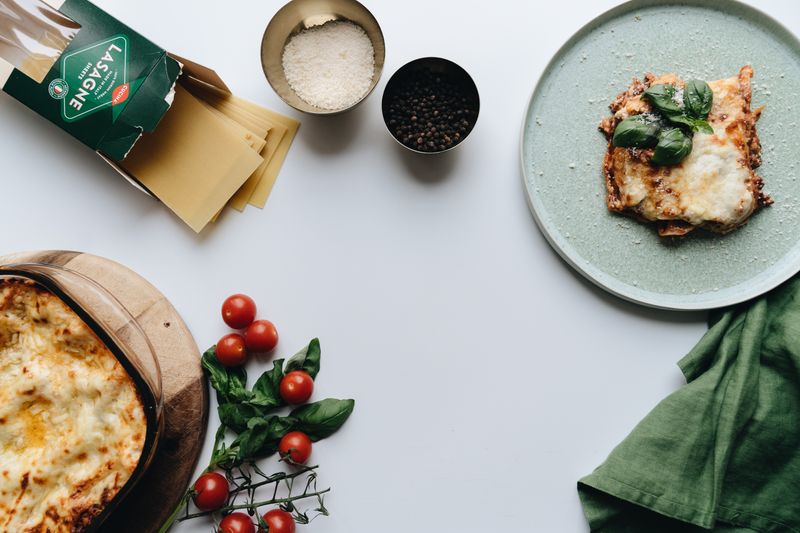
Béchamel is built by cooking butter and flour together into a roux, then whisking in warm milk until it thickens into a smooth white sauce. It's the base for cheese sauces (add cheese and it becomes Mornay), cream soups, and the binding layer in dishes like lasagna or gratins. The common failure point is lumps, which happen when cold milk hits a hot roux too fast; whisking constantly and adding the milk gradually in stages prevents this.
Velouté: stock thickened the same way
Velouté uses the same roux technique as béchamel, but the liquid is a light stock — chicken, veal, or fish — instead of milk. The result is a pale, savory sauce that forms the base for dishes like chicken fricassée or sauce suprême (velouté finished with cream). Because the flavor depends entirely on the stock, a weak or watery stock produces a thin, flavorless velouté no amount of seasoning can fully fix.
Espagnole: the brown sauce base
Espagnole starts with a brown roux (cooked longer, until it darkens) combined with brown stock, tomato paste, and aromatic vegetables, then simmered and strained. It's rarely served as-is; instead it's reduced further with wine and other ingredients into demi-glace, which in turn becomes sauces like bordelaise or chasseur. This is the slowest of the five mother sauces to make properly, which is why most home cooks either skip straight to a simplified pan sauce or use a store-bought stock reduction as a shortcut.
Tomato sauce: thickened by the vegetable itself
Unlike the roux-based sauces above, tomato sauce gets its body mostly from reducing tomatoes themselves, sometimes with a small amount of roux or a mirepoix base for depth. It's the most familiar mother sauce to American cooks because it's also, simply, pasta sauce. Variations move toward Italian tradition (olive oil, garlic, basil) or further toward French tradition (butter, aromatic vegetables, a bay leaf), but the core technique — cooking tomatoes down until they lose their raw edge and concentrate — stays the same.
Hollandaise: an emulsified sauce, not a roux-based one
Hollandaise breaks the pattern of the first four: there's no roux at all. It's an emulsion of egg yolk and melted butter, stabilized by whisking and gentle heat, with lemon juice or vinegar for acidity. Because it depends on emulsification rather than starch, it behaves differently — it can curdle if it gets too hot, or separate if it's whisked too little. Béarnaise, a tarragon-and-shallot variation, is the best-known sauce built on this same base.
Why this matters even if you never make espagnole
Most home cooks will never simmer a proper espagnole for an afternoon, and that's fine — the value of the mother sauce framework isn't that you'll make all five, it's that it tells you what to pay attention to when a sauce goes wrong. If a cream sauce turns thin, the question is whether the roux was undercooked or the liquid was added too fast, the same diagnostic you'd use for béchamel. If a pan sauce tastes flat, the question is whether the base liquid (stock, wine, fond) was reduced enough, which is the same question espagnole answers at a larger scale. Thinking in terms of thickener and base liquid, rather than in terms of named dishes, is what lets you adapt a technique instead of just following one recipe at a time.
How the five compare
| Mother sauce | Thickener | Base liquid | Common descendant |
|---|---|---|---|
| Béchamel | Butter-flour roux | Milk | Mornay (cheese sauce) |
| Velouté | Butter-flour roux | Light stock | Sauce suprême |
| Espagnole | Dark roux | Brown stock | Demi-glace, bordelaise |
| Tomato sauce | Reduction | Tomatoes | Marinara-style sauces |
| Hollandaise | Egg yolk emulsion | Butter | Béarnaise |
Common mistakes
- Adding cold liquid to a hot roux too quickly, which causes lumps in béchamel and velouté.
- Rushing espagnole by skipping the simmer time that develops its color and depth.
- Treating tomato sauce as "done" before it has reduced enough to lose its raw, watery taste.
- Overheating hollandaise, which scrambles the egg yolk instead of gently cooking it.
Frequently asked questions
- Do I need to learn all five to cook well at home?
- No. Béchamel and tomato sauce cover most everyday home cooking; espagnole and velouté are more useful if you cook a lot of meat dishes with pan sauces.
- Is hollandaise really a "mother" sauce if it has no roux?
- Yes — the classification is about being a foundational technique with its own family of descendants, not about using a roux specifically.
- What's the easiest mother sauce to start with?
- Béchamel. It uses pantry staples, tolerates small timing mistakes, and teaches the roux technique used in two other mother sauces.
Sources: classic French culinary technique references on the mother sauce classification system and roux-based sauce methods; general culinary education materials on emulsified sauce technique for the hollandaise section.